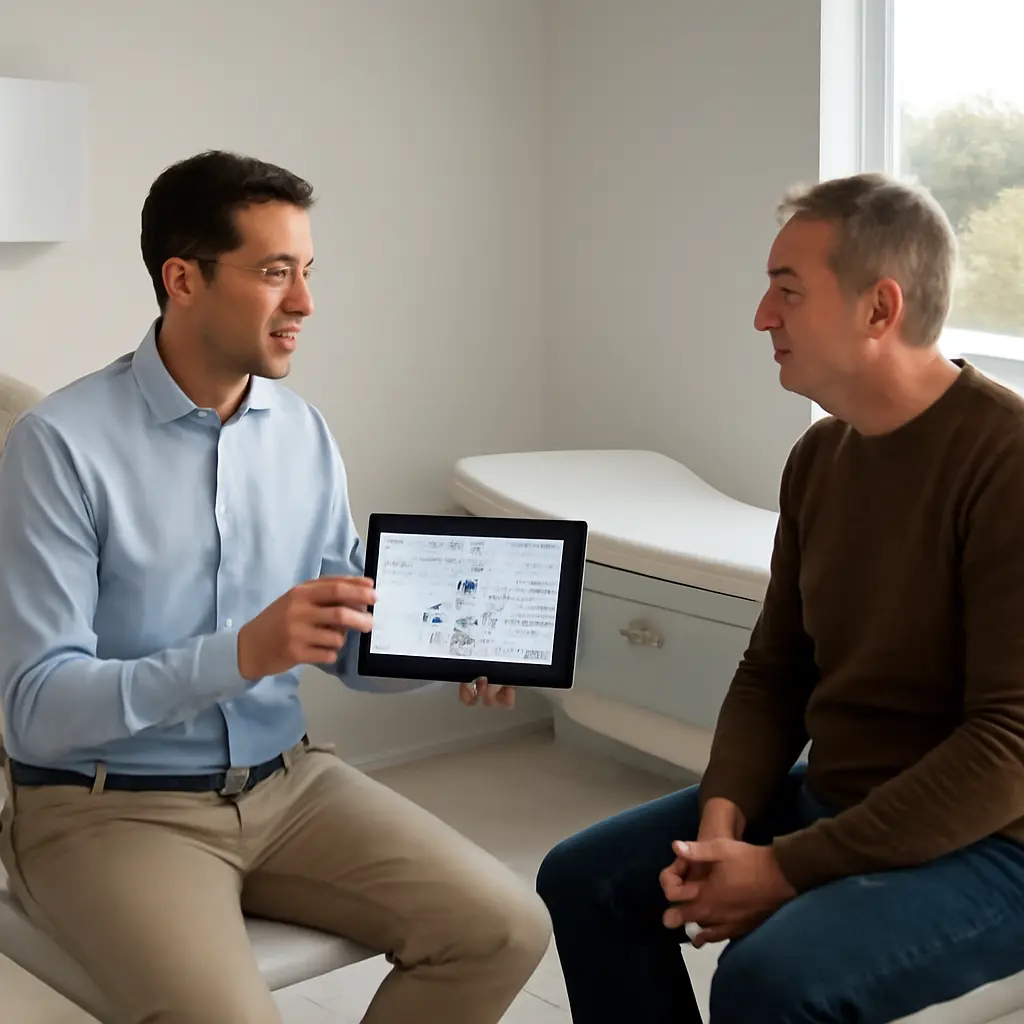
Wearable ECG technology is transforming how clinicians detect heart rhythm problems by recording electrical signals outside the clinic and making longer-term monitoring easier. An electrocardiogram (ECG or EKG) measures the heart’s electrical activity; consumer smartwatches can capture a single-lead tracing, while medical-grade patches and implantable monitors can record for days to years. These tools can help uncover intermittent atrial fibrillation (AF), a rhythm disorder that affects an estimated 59.7 million people worldwide, but they do not diagnose every heart condition or replace clinical evaluation. Their value—and their limits—becomes clearer by examining how wearable ECG works, what evidence supports it, how clinicians use it, and what patients should know about accuracy and follow-up.
Wearable ECG technology’s role in early heart-problem detection
Wearable ECG technology is a way to record cardiac electrical activity using sensors worn on or near the body, rather than relying only on a brief ECG taken during an office visit. The U.S. Food and Drug Administration (FDA) describes ECG devices as tools that record the heart’s electrical signals; their intended use and regulatory status differ by product. A wearable recording can provide useful evidence for a clinician, but an alert from a consumer device is not, by itself, a medical diagnosis.
The need for earlier detection is substantial. The World Heart Federation’s 2024 global burden analysis estimated that AF affected about 59.7 million people worldwide in 2019. Because AF can come and go, a person’s rhythm may appear normal during a short clinic ECG. Longer monitoring can increase the opportunity to capture an episode, although finding more rhythm irregularities does not automatically mean that screening improves health outcomes. The central questions are therefore what each technology measures, who may benefit, and how results should be confirmed and acted upon.
How wearable ECG monitoring detects heart rhythm problems
Wearable ECG monitoring refers to recording the heart’s electrical activity over time with electrodes placed on the skin or built into a wearable device. The American Heart Association explains that an ECG records the timing and strength of electrical signals as they pass through the heart. Clinicians interpret the tracing alongside symptoms, medical history, and other tests; a device’s automated classification is only one input.
The main types include single-lead smartwatch ECGs, adhesive patch monitors, Holter monitors, event monitors, and implantable cardiac monitors. They differ in how long they record, whether recording is continuous or user-triggered, and how much clinical oversight is built in. In general, longer observation can be useful when symptoms are infrequent—but device selection should match the clinical question.
Smartwatch ECGs: quick, user-triggered recordings
A smartwatch ECG typically records a single-lead tracing when the wearer touches an electrode with a finger, often for about 30 seconds. This can give a clinician a snapshot during palpitations or another symptom. Some compatible watches also use optical sensors to estimate pulse patterns and issue an irregular-rhythm notification; that pulse-based alert is not the same as an ECG recording.
In the Apple Heart Study, published in the New England Journal of Medicine in 2019, 419,297 participants enrolled through a smartphone app. An irregular-pulse notification was issued to 0.52% of participants. Among participants who received a notification and later returned an analyzable ECG patch, the positive predictive value of a notification for AF during simultaneous monitoring was 0.84. The study showed that a large-scale wearable program could identify people for follow-up, but it did not establish that every alert represented AF or that population-wide smartwatch screening prevents strokes.
Holter and adhesive patch monitors: longer recording windows
Holter monitors and adhesive ECG patches are clinical ambulatory monitors worn during normal daily activities. A Holter monitor commonly records continuously for 24 to 48 hours, while patches may be worn for several days or, depending on the device and prescription, longer. Their longer recording periods can help capture rhythm episodes that a brief office ECG misses.
These monitors are particularly relevant when symptoms occur often enough to be captured over days. Patients may keep a symptom diary or press an event button so clinicians can compare sensations with the tracing. Skin irritation, signal noise, device adherence, and the timing of symptoms can affect the amount of usable data.
Event and implantable monitors: monitoring for infrequent episodes
An event monitor records or saves ECG information when a patient activates it or when the device detects a rhythm pattern; some external models can be worn for weeks. An implantable cardiac monitor is a small device placed under the skin that can monitor rhythm for years. Clinicians may consider these options when episodes are too infrequent for a short-term monitor or when investigating selected unexplained fainting episodes.
The longer monitoring window can increase the chance of identifying an intermittent arrhythmia, but it also produces more data that require interpretation. Implantable monitoring is a medical procedure, not a consumer-wearable upgrade, and its benefits and risks depend on the patient’s circumstances and the reason for monitoring.
Evidence for wearable heart monitoring and early detection
Evidence for wearable monitoring is strongest when the technology is used to capture a suspected rhythm problem and the finding is clinically reviewed. The U.S. Preventive Services Task Force concluded in 2022 that evidence was insufficient to determine the balance of benefits and harms of screening asymptomatic adults for AF. This is not a recommendation against evaluating symptoms; it reflects uncertainty about whether routine screening of people without symptoms improves outcomes.
A key distinction is between detecting more irregular rhythms and preventing serious events such as stroke. Screening can lead to follow-up tests and treatment, but it can also generate false alarms, anxiety, and unnecessary investigations. The following evidence illustrates both the potential and the limits.
Large-scale smartwatch research
The Apple Heart Study demonstrated that smartphone-connected wearables can recruit and monitor hundreds of thousands of participants outside traditional research settings. Of the 419,297 participants, 2,161 received an irregular-pulse notification. Among those who returned an ECG patch after notification, AF was found in 34% of participants with an analyzable patch. These results are not a simple measure of how accurate a watch is for every user: only a subset completed patch monitoring, and the study population and follow-up process shape how the figures should be interpreted.
Screening trials and the difference between detection and benefit
The LOOP randomized trial, published in The Lancet in 2021, studied implantable-loop-recorder screening in older adults with stroke risk factors. The device detected AF in 31.8% of participants in the monitoring group, compared with 12.2% in the usual-care group. However, the primary outcome of stroke or systemic arterial embolism occurred in 4.5% versus 5.6%, a difference that was not statistically significant. The trial underscores why a higher detection rate alone cannot prove that screening prevents strokes.
For patients with a prior stroke of uncertain cause, extended monitoring can be useful in finding AF that may influence care. The American Heart Association and American Stroke Association’s 2021 secondary-prevention guideline supports considering long-term rhythm monitoring in selected patients. The appropriate approach depends on the person’s history and requires clinician-directed interpretation.
Clinical uses, accuracy, and limitations of wearable ECGs
Wearable ECGs can support symptom evaluation, follow-up of known rhythm disorders, and selected efforts to find previously unrecognized arrhythmias. They are not universal heart-health tests: an ECG-focused wearable cannot reliably rule out every heart problem, including many structural conditions, coronary artery disease, or heart attacks. A normal tracing also does not guarantee that an intermittent problem was absent at other times.
Accuracy depends on the device, the signal quality, the type of rhythm, how the recording was made, and how the result is interpreted. Motion, loose contact, tattoos, skin conditions, and irregular beats can interfere with recordings. Consumer devices may label a tracing as inconclusive or fail to classify a rhythm; a clinician may need a standard ECG or another form of monitoring.
False alerts, missed episodes, and signal quality
A false alert occurs when a device flags a rhythm that is not the suspected condition; a missed episode occurs when the device fails to detect a real problem. Optical pulse sensors infer pulse timing from blood-flow changes and do not directly record the heart’s electrical activity. A single-lead ECG provides electrical information but captures only a limited view compared with a standard 12-lead ECG.
Users should follow the device instructions, record symptoms and their timing, and share the original tracing or report with a healthcare professional. Repeated alerts, symptoms, or an inconclusive result should prompt medical advice rather than repeated self-testing or self-diagnosis.
Privacy, access, and responsible use
Wearable monitoring also raises questions about data privacy, health-record integration, cost, and unequal access to smartphones or compatible devices. People should review how a product stores and shares health data and whether its features are available in their region. Clinicians and health systems need clear processes for reviewing patient-submitted recordings so that alerts do not become disconnected from appropriate care.
A useful real-world workflow links the wearable to clinical follow-up: a patient records a symptom, shares the tracing, and a clinician decides whether to confirm the finding with a medical-grade ECG or longer monitor. The device can help start that conversation, while diagnosis and treatment decisions remain grounded in clinical assessment.
What to do when a wearable detects an irregular rhythm
A wearable alert should be treated as a reason to seek appropriate advice—not as proof of a diagnosis or a reason to start or stop medication. The FDA advises consumers to understand that over-the-counter ECG features are not substitutes for diagnosis and treatment by a healthcare professional. Save the tracing if possible and discuss it with a clinician, especially if alerts recur or symptoms are present.
- Check the device instructions and repeat a recording only if the product recommends it and you feel well enough to do so.
- Note the time, symptoms, activity, and any relevant medication, then share the information with a healthcare professional.
- Seek urgent medical care for severe chest pain, fainting, severe shortness of breath, or other symptoms that may signal an emergency, regardless of what the wearable displays.
- Do not change prescribed treatment based solely on a consumer-device notification.
For people with known heart disease or prior stroke, clinicians can help decide whether a smartwatch, external monitor, or implantable monitor fits the specific question. For people without symptoms, the decision to pursue screening should account for age, risk factors, possible downstream testing, and the still-limited evidence on population-wide benefit.
Conclusion: wearable ECG can bring intermittent heart rhythms into view
Wearable ECG technology is changing early rhythm detection by extending observation beyond the clinic, from quick smartwatch tracings to multi-day patches and long-term implantable monitors. Research shows that wearables can identify people who may need follow-up, while screening trials and expert guidance caution that more detection does not automatically translate into fewer strokes or better outcomes. Accuracy, signal quality, privacy, and clinical confirmation all matter.
The practical next step is to use wearables as information-gathering tools, not diagnostic authorities: save relevant recordings, discuss repeated alerts or symptoms with a healthcare professional, and seek urgent care for emergency warning signs. Patients considering routine screening can ask their clinician about the potential benefits, limitations, and appropriate monitoring options.
Sources: World Heart Federation, “Atrial fibrillation: a growing global health challenge,” 2024, https://world-heart-federation.org/news/atrial-fibrillation-a-growing-global-health-challenge/; U.S. Food and Drug Administration, “Electrocardiogram (ECG) Devices,” https://www.fda.gov/medical-devices/cardiovascular-devices/electrocardiogram-ecg-devices; American Heart Association, “What Is an Electrocardiogram (ECG or EKG)?,” https://www.heart.org/en/health-topics/heart-attack/diagnosing-a-heart-attack/electrocardiogram-ecg-or-ekg; Perez, M. V., et al., “Large-Scale Assessment of a Smartwatch to Identify Atrial Fibrillation,” New England Journal of Medicine, 2019, https://www.nejm.org/doi/full/10.1056/NEJMoa1901183; U.S. Preventive Services Task Force, “Atrial Fibrillation: Screening,” 2022, https://www.uspreventiveservicestaskforce.org/uspstf/recommendation/atrial-fibrillation-screening; Svendsen, J. H., et al., “Implantable Loop Recorder Detection of Atrial Fibrillation to Prevent Stroke (The LOOP Study),” The Lancet, 2021, https://doi.org/10.1016/S0140-6736(21)01698-6; Kleindorfer, D. O., et al., “2021 Guideline for the Prevention of Stroke in Patients With Stroke and Transient Ischemic Attack,” Stroke, 2021, https://www.ahajournals.org/doi/10.1161/STR.0000000000000375.