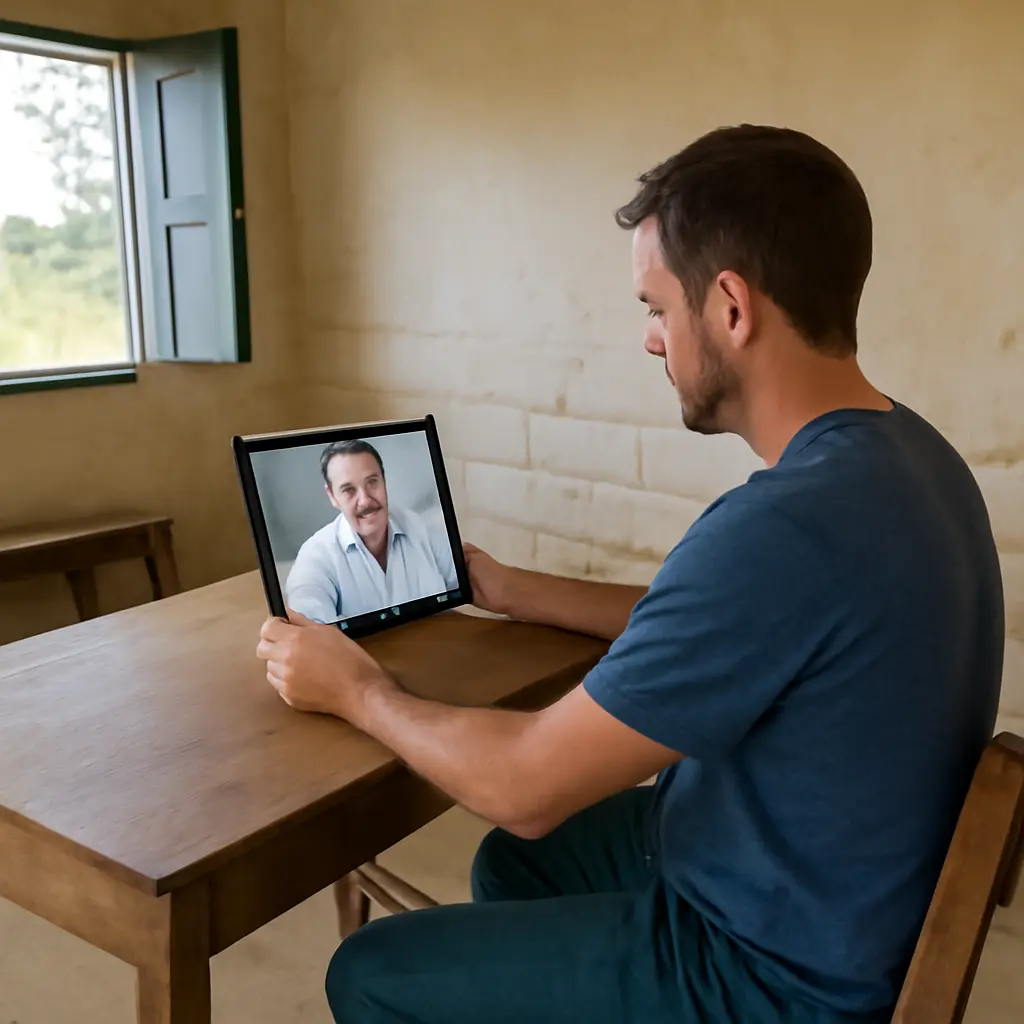
Telemedicine is the use of communication technologies to provide clinical care when patients and clinicians are in different locations. In cardiology, it can connect rural residents with specialists for consultations, monitoring, and follow-up without requiring every visit to involve a long trip. The approach matters because rural communities often face persistent shortages of physicians and longer distances to care: the National Center for Health Statistics reported that 9.3% of adults in nonmetropolitan areas had no usual source of health care in 2022, compared with 6.5% in metropolitan areas. Evidence from remote monitoring and telecardiology programs suggests that virtual care can help close access gaps, although it works best as part of a coordinated system that includes local clinicians, diagnostic testing, and emergency services.
Telecardiology defines remote access to specialist care
Telecardiology is the delivery of cardiovascular assessment, consultation, and ongoing care through telecommunications, including video visits, secure messaging, remote transmission of electrocardiograms, and connected monitoring devices. The American Heart Association describes telehealth as a way to extend health services beyond traditional clinical settings; in cardiology, the specific tools range from a one-time video consultation to continuous transmission of heart-rhythm or heart-failure data.
These services are particularly relevant in rural areas, where specialist supply and travel time can constrain timely evaluation. The Health Resources and Services Administration’s 2024 data report designated more than 100 million people as living in primary-care Health Professional Shortage Areas; shortage designations also apply to other clinician types and do not themselves measure cardiology access. Telecardiology cannot replace every in-person examination, but it can reduce the distance barrier for appropriate consultations and follow-up.
Video consultations and virtual follow-up
A video consultation allows a cardiologist to review symptoms, medications, medical history, and available test results with a patient and, when useful, a local clinician. It is suited to many follow-up visits and some initial evaluations, but a virtual encounter may not provide the physical examination or tests needed to make a diagnosis. The American College of Cardiology’s telehealth guidance emphasizes matching the visit format to the clinical question, patient needs, and available technology.
A rural clinic can serve as a telehealth hub, helping patients connect to a specialist while staff collect vital signs or arrange an electrocardiogram. This model preserves local support while making specialist expertise available remotely. If symptoms suggest an emergency—such as severe chest pain, fainting, or sudden difficulty breathing—telemedicine should not delay emergency evaluation.
Remote monitoring for heart failure and arrhythmias
Remote patient monitoring uses connected devices or home measurements to send health information to a care team. Depending on the program, data may include weight, blood pressure, heart rate, symptoms, or rhythm recordings. For heart failure, changes in weight or symptoms can prompt a clinical review; for suspected arrhythmias, wearable or handheld electrocardiogram devices can capture rhythm information for clinician interpretation.
The American Heart Association’s 2022 scientific statement on remote monitoring in heart failure notes that monitoring can support earlier recognition of deterioration, but outcomes depend on program design, patient participation, and timely clinical responses. A device alone is not a care plan: teams need clear thresholds, assigned staff, and procedures for responding to concerning readings.
Telecardiology improves access through coordinated local care
Access improves when telecardiology links specialist expertise with local services rather than operating as a stand-alone video platform. A referring clinician can gather a history and initial tests, the remote cardiologist can advise on diagnosis or treatment, and the local team can help carry out the plan. This arrangement is especially valuable when a patient needs specialist input but not an immediate transfer to a distant hospital.
Evidence supports the potential of well-organized remote programs. In the randomized TIM-HF2 trial, published in The Lancet in 2018, structured remote patient management for selected people with chronic heart failure reduced the percentage of days lost to unplanned cardiovascular hospital admissions or death compared with usual care. The intervention included coordinated monitoring and clinical management; its findings should not be interpreted as proof that every telehealth model produces the same benefit.
Store-and-forward tests and specialist review
Store-and-forward telecardiology involves capturing clinical information locally and securely sending it for later specialist review. Examples include electrocardiograms, echocardiogram images, and clinical records. This approach can help a rural clinician obtain an expert interpretation without arranging a live video appointment, while enabling the cardiologist to determine whether an in-person assessment or additional testing is needed.
The American College of Cardiology has described telehealth as a flexible set of services rather than one technology. In practice, asynchronous review can complement real-time consultation, but its usefulness depends on image quality, complete clinical information, appropriate data handling, and a dependable process for communicating results to the patient and local care team.
Virtual specialty networks and hub-and-spoke care
A hub-and-spoke model connects a specialist center, or hub, with rural clinics and hospitals, or spokes. The hub can provide cardiology consultation and protocols; local sites can provide examinations, basic tests, and continuing support. For urgent cases, local teams can coordinate with emergency departments and transfer services instead of relying on a remote visit alone.
The Veterans Health Administration offers a large-scale example of telehealth integration. Its annual reports describe telehealth services used across a nationwide care system, including specialty care. Such programs show how remote care can be embedded in an established network, although results from a national integrated system may not transfer directly to smaller rural practices with different staffing and technology resources.
Telecardiology outcomes depend on equitable implementation
Telemedicine can reduce travel, simplify follow-up, and make specialist advice more available, but access to a virtual appointment is not automatic. Broadband availability, device access, digital skills, language services, disability accommodations, privacy, and insurance coverage all shape whether patients can use the service. The Federal Communications Commission has documented persistent gaps in broadband availability, particularly in rural and Tribal areas, while the U.S. Census Bureau’s American Community Survey tracks household internet access as an important dimension of the digital divide.
Programs should therefore offer alternatives such as telephone visits when clinically appropriate, equipment support, interpreter services, and private telehealth rooms at community clinics. They should also monitor who completes visits and who is left out, using measures such as wait time, missed appointments, travel avoided, follow-up completion, and clinical outcomes.
Clinical safety, privacy, and continuity
Safe telecardiology requires clear limits on what can be assessed remotely, secure handling of health information, and continuity between virtual and in-person care. Clinicians need access to relevant records and test results, while patients need instructions for obtaining urgent help and knowing whom to contact if symptoms worsen. The U.S. Department of Health and Human Services explains that covered health organizations must safeguard protected health information under applicable privacy and security rules.
A remote visit should trigger an in-person assessment when the diagnosis remains uncertain, a physical examination is essential, testing cannot be obtained locally, or a patient’s condition is unstable. These safeguards help ensure that convenience does not come at the expense of timely, appropriate treatment.
Reimbursement and workforce capacity
A sustainable program needs reliable reimbursement, staff time, technical support, and a workflow for reviewing incoming data. Federal and state telehealth payment policies have changed over time, and coverage rules can differ by payer, service, patient location, and technology. The Centers for Medicare & Medicaid Services maintains current telehealth policy information, so clinics should verify requirements rather than assume that every virtual cardiology service is covered in the same way.
Remote monitoring also creates work: someone must assess alerts, document decisions, contact patients, and coordinate follow-up. Programs should define who owns each task and set response expectations before enrolling patients. Without adequate staffing, high volumes of data can overwhelm teams and undermine the very access telemedicine is meant to improve.
Conclusion: telecardiology can narrow rural access gaps
Telecardiology includes video consultations, remote monitoring, asynchronous test review, and coordinated specialty networks. These approaches can bring cardiology expertise closer to rural patients, reduce some travel burdens, and support ongoing management of conditions such as heart failure and arrhythmias. Evidence from structured programs is promising, but benefits depend on clinical oversight, local partnerships, broadband and device access, privacy protections, and appropriate routes to in-person or emergency care.
Health systems and rural communities can strengthen results by assessing local needs, building partnerships between cardiologists and primary-care teams, and measuring access and outcomes across patient groups. Patients should discuss with their clinicians whether a virtual visit or remote-monitoring program is appropriate for their condition, and communities can advocate for broadband investment and accessible telehealth support.
Sources: National Center for Health Statistics, Health, United States, 2023, Table 67, https://www.cdc.gov/nchs/hus/topics/health-care-access.htm; Health Resources and Services Administration, Designated Health Professional Shortage Areas Statistics, Fourth Quarter of Fiscal Year 2024, https://data.hrsa.gov/Default/GenerateHPSAQuarterlyReport; American Heart Association, Telehealth and Cardiovascular Care, https://www.heart.org/en/health-topics/consumer-healthcare/what-is-cardiovascular-disease/telehealth-and-cardiovascular-care; American College of Cardiology, Telehealth Resource Center, https://www.acc.org/Tools-and-Practice-Support/Practice-Solutions/Telehealth; Koehler et al., “Efficacy of telemedical interventional management in patients with heart failure (TIM-HF2),” The Lancet, 2018, https://doi.org/10.1016/S0140-6736(18)31880-4; American Heart Association, “Remote Patient Management in Heart Failure: A Scientific Statement,” Circulation, 2022, https://www.ahajournals.org/doi/10.1161/CIR.0000000000001073; U.S. Department of Veterans Affairs, Annual Report on Telehealth, https://www.telehealth.va.gov/; Federal Communications Commission, 2024 Section 706 Report, https://www.fcc.gov/reports-research/reports/broadband-progress-reports; U.S. Census Bureau, American Community Survey, Computer and Internet Use, https://www.census.gov/programs-surveys/acs; U.S. Department of Health and Human Services, HIPAA for Professionals, https://www.hhs.gov/hipaa/for-professionals/index.html; Centers for Medicare & Medicaid Services, Telehealth, https://www.cms.gov/medicare/coverage/telehealth.